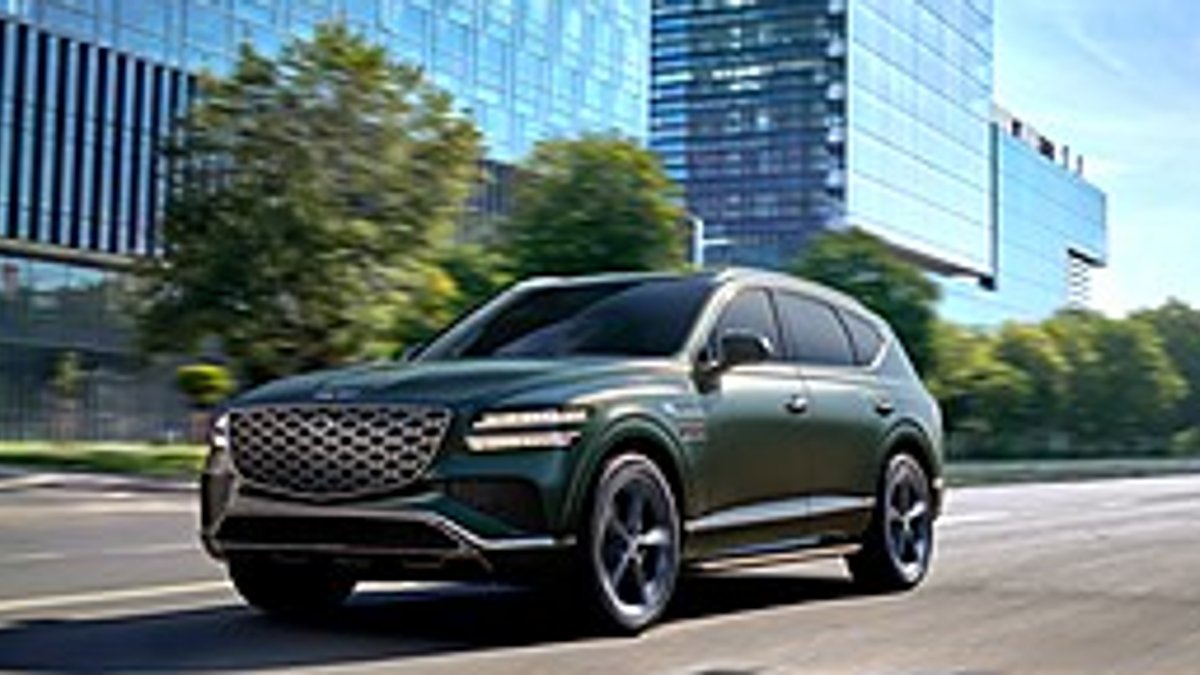
Genesis Australia plans to introduce at least one hybrid powertrain in 2027, though the local division is seeking an earlier allocation to meet tightening emissions regulations. The brand is currently pushing its Korean parent for hybrid technology ahead of the broader rollout, driven by the commercial importance of low-CO2 models.
Technology details and timing
Genesis this month detailed its first petrol-electric powertrain, which will debut in the GV80 large SUV in South Korea in September before a wider international rollout. The system uses a rear-wheel drive 2.5-litre turbocharged four-cylinder petrol-electric hybrid in a P1+P2 configuration. It combines a starter-generator motor and a traction motor to produce 259kW of power and approximately 530Nm of torque, an increase over the non-hybrid format’s 224kW/422Nm.
Related: 2026 Suzuki e‑Vitara Ultra 2WD Impresses Reviewers
Genesis claims at least a 25 per cent fuel economy improvement when compared to the non-hybrid version of the 2.5-litre engine. Based on WLTP ratings, the hybrid’s consumption should land around 6.6-8.3L/100km with associated CO2 emissions of about 173-186g/km. The debut Genesis hybrid is a plugless setup but Hyundai Motor Group (HMG) confirmed last week that both Hyundai and Genesis will launch more ambitious extended-range EV (EREV) hybrid tech across both brands in 2027.
Expanding the lineup
The hybrid system uses a new seven-speed hybrid transmission and a liquid-cooled battery that is said to allow greater discharge performance. It is a longitudinal adaptation of the Hyundai Motor Group’s new-generation hybrid tech already on the road in models like the Hyundai Palisade. Korean industry reporting has indicated that the G80 sedan would follow by adding the hybrid option in very late 2026 or early 2027 with the key GV70 midsize SUV set to become the third Genesis hybrid in around March 2027.
With the GV70 accounting for nearly three in four Genesis sales in Australia, it is possible that the brand will wait to launch hybrid power with its best-seller. The latter model would be particularly significant for Australia with the New Vehicle Efficiency Standard (NVES) regime set to see Type 1 headline CO2 limits tighten at the end of the year from 117g/km for 2026 to 92g/km for 2027 and onto 68g/km in 2028. Lower-emission hybrids could materially improve Genesis’ local NVES position, potentially providing greater pricing flexibility across a range presently split between relatively thirsty turbo-petrol models and officially zero-emission BEVs.
Related: Audi adjusts Q4 e-tron pricing for 2027
By introducing hybrid tech, Genesis is considerably expanding its powertrain agnosticism. The important GV70 model has been available with pure-ICE and BEV options for more than two years but the introduction of in-betweener hybrids will provide additional CO2-saving options. HMG last week confirmed that Genesis will launch an extended-range electric SUV in early 2027 with more than 1030km of combined range, using a smaller (and cheaper) battery than an equivalent BEV, with a combustion engine as an onboard generator.
Genesis Australia product planning manager John Zhang said the company was examining customer preferences across different tiers of electrification. “We see that there is a demand for a hybrid powertrain and we see that there is interest in the market for plug-in hybrid and extended range hybrids,” said Mr Zhang. “More than ever, we’re looking at this, and really looking at what the next thing (is) that we can bring in so that customers have choice when it comes to our brand and the powertrains that we have on offer.”




Leave a Reply