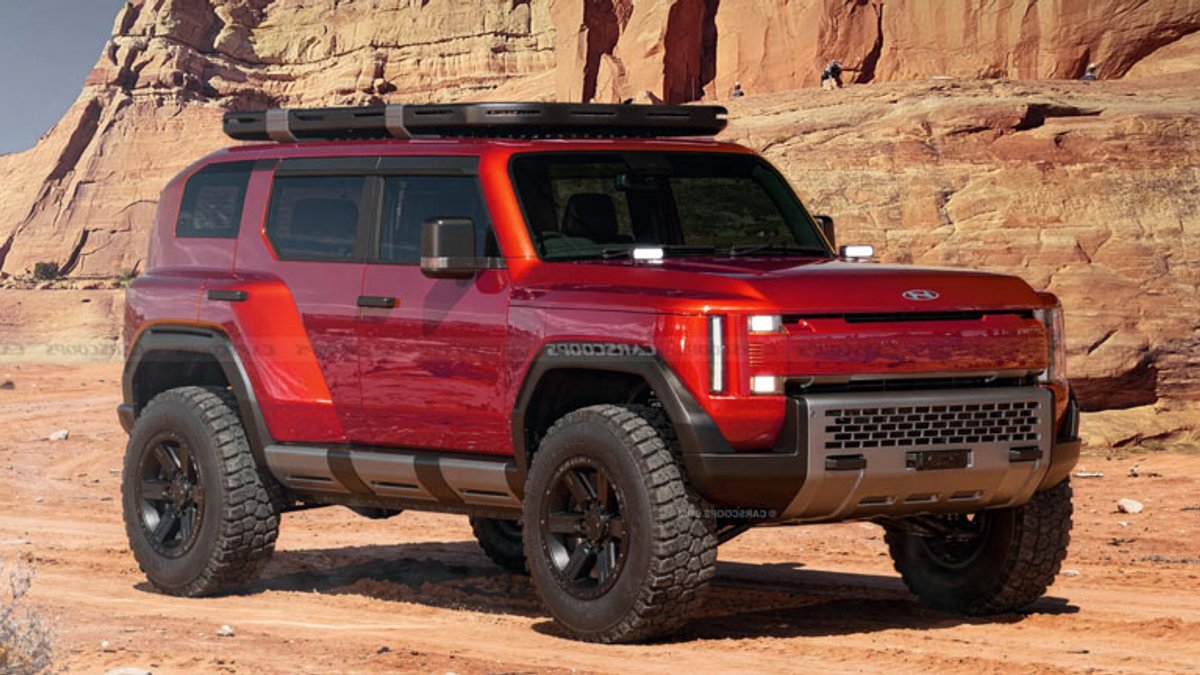
Hyundai is broadening its portfolio of ladder-frame vehicles, marking a significant entry into a market long controlled by major competitors. The automaker has set a target of a 35% global sales increase by 2030, projecting annual volumes of 5.55 million units—a benchmark that shows its optimism about the rising appeal of tough, adaptable vehicles. This expansion rests on a newly developed platform built for toughness and flexibility. Jose Munoz, a Hyundai executive, stated that ladder-frame models will account for half of the company’s sales growth over the next four years. The shift responds directly to consumer demand for vehicles that perform in rugged conditions while remaining practical for daily use.
Hyundai’s plans extend beyond trucks to include SUVs like the Boulder and Crater, which will challenge rivals such as the Ford Bronco. The Boulder will showcase a distinctive “Art of Steel” design, combining robustness with a bold visual identity. Work on the first ladder-frame truck, a mid-sized model, is progressing, with an anticipated 2029 release. These vehicles will incorporate hybrid or range-extender powertrains to merge performance with fuel efficiency.
Manufacturing will center on Hyundai’s Metaplant facility in Georgia, which already produces the Ioniq 5 and Kia Sportage Hybrid. Munoz confirmed the U.S. plant will function as both a production site and an export hub, supplying regions where ladder-frame vehicles are gaining traction. The platform will also be adopted by sister brands Kia and Genesis, further strengthening Hyundai’s position in this growing segment.
The company’s push into ladder-frame vehicles reflects a broader industry trend toward vehicles that blend off-road capability with urban practicality. By centralizing production in the U.S. and leveraging its existing infrastructure, Hyundai aims to streamline costs while meeting global demand. The inclusion of hybrid technologies in these models aligns with regulatory pressures and consumer preferences for sustainable mobility solutions. Hyundai’s strategy also involves cross-brand collaboration, with Kia and Genesis set to utilize the same platform. This approach ensures consistency in quality and performance while expanding the company’s market influence. The 2029 launch of the first ladder-frame truck marks a critical milestone, as it will serve as a benchmark for future models in the lineup.
According to local reports, the move signals Hyundai’s commitment to dominating the ladder-frame market, a sector previously dominated by established players. The company’s focus on durability, adaptability, and hybrid technology positions it to capture a significant share of the growing demand for versatile vehicles. With production already underway at its Georgia facility, Hyundai is poised to accelerate its expansion in the coming years.



Leave a Reply