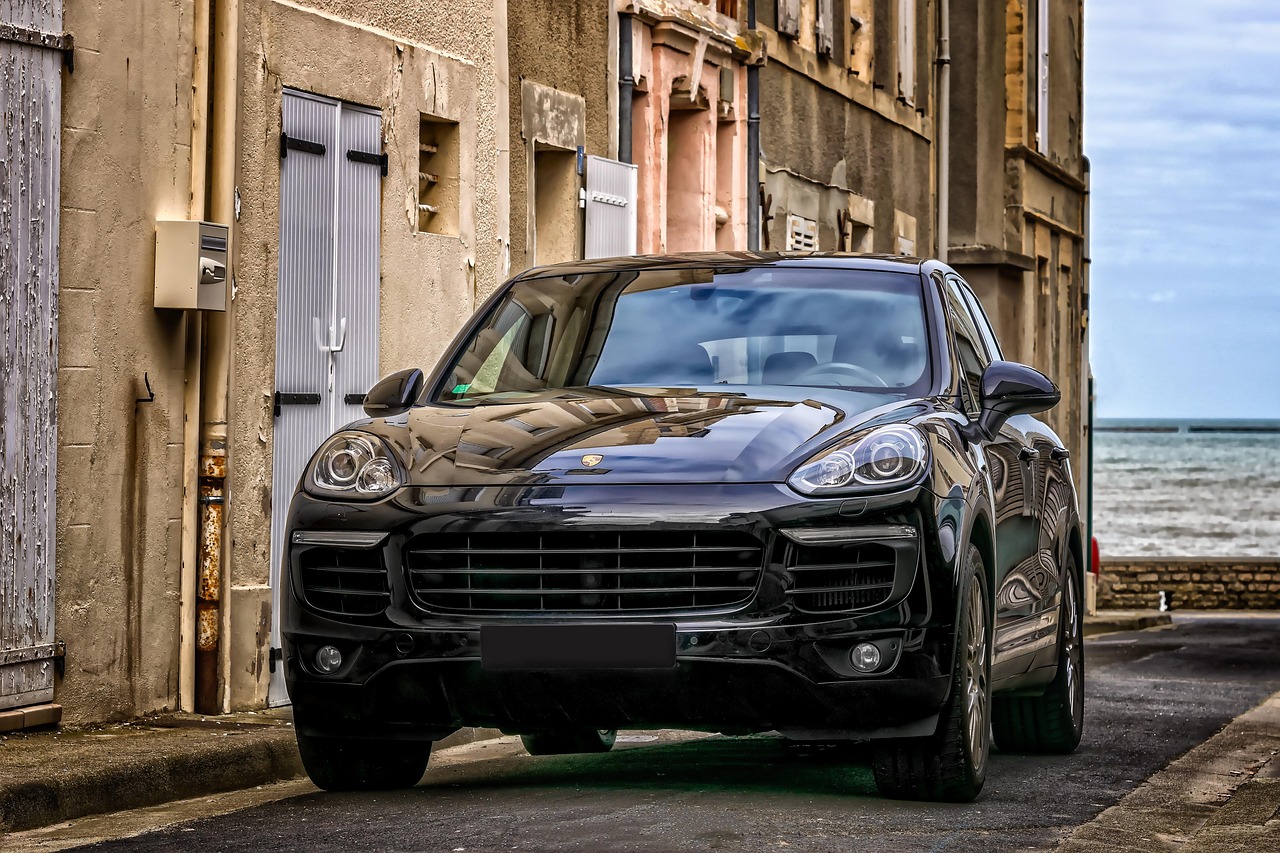
The morning air at Willow Springs carried the chill of a desert night when the first of four SUVs rolled onto the skidpad. Tires hissed against fresh asphalt. By noon, temperatures would exceed 100 degrees, but the real heat came from beneath the hoods—V-8s thrumming at 6,000 rpm, exhaust notes ricocheting off the San Gabriel Mountains. This comparison differed from typical SUV tests. The 2003 Porsche Cayenne S, BMW X5 4.4i, Cadillac SRX V8, and Infiniti FX45 weren’t designed to haul plywood or ford streams. They aimed to outrun 1990s sports sedans while carrying five adults and luggage. They succeeded.
These vehicles stood out not just for power—though 315-plus-horsepower in a two-and-a-half-ton vehicle was unprecedented in 2000—but for defying expectations. Automakers had spent decades marketing SUVs as work vehicles or wilderness explorers, not for canyon roads or stoplight races. Within 18 months, Porsche, BMW, Cadillac, and Infiniti rewrote the rules. They equipped SUVs with adaptive suspensions from sports sedans, braking systems that could stop 5,000 pounds from 60 mph in under 120 feet, and steering that communicated front tire movements. Most remarkably, they achieved this while meeting California’s Low Emission Vehicle standards, demonstrating that performance and environmental compliance could coexist. The family hauler had acquired performance credentials.
Table of Contents
- Why These Four SUVs Changed the Performance Game in 2004
- The Nürburgring Factor: How Track Testing Shaped SUV Development
- Engine Breakdown: V-8s, AWD Systems, and the 300-HP Benchmark
- Suspension Wars: Air vs. Steel and the Handling Trade-Offs
- Performance Test Results: Acceleration, Braking, and Wet-Track Dominance
- The Marketing Spin: Why BMW Called the X5 a ‘Sport Activity Vehicle’
- From 2004 to Today: The Evolution of High-Performance SUVs
- Daily Drivability: Which 2004 SUV Still Feels Modern in 2026
- The Collectibility Factor: Which of These SUVs Are Future Classics
- Buyer’s Guide: Should You Buy One of These SUVs in 2026
Why These Four SUVs Changed the Performance Game in 2004
The early 2000s marked a shift in how automakers viewed SUVs. They stopped treating them as trucks with extra seats and began designing them as cars with extra space. This change responded to specific American demand. By 2003, the U.S. had become the world’s largest market for luxury SUVs, but buyers wanted more than badge prestige or off-road capability. They sought the thrill of a V-8, the cornering poise of a sport sedan, and three-row practicality in one package. The Cayenne S, X5 4.4i, SRX V8, and FX45 didn’t just meet this demand—they transformed it into a new standard.
Porsche’s entry proved most surprising. The brand, known for air-cooled flat-sixes and rear-engine configurations, suddenly produced a 5,000-pound SUV with a 4.5-liter V-8. The Cayenne S wasn’t merely a profit-driven model; it represented a technical statement. Engineers tuned its air suspension to replicate 911 body control, and its all-wheel-drive system could direct all torque to the rear wheels—a feature unprecedented in SUVs at the time. BMW leveraged experience from the E39 M5’s 4.4-liter V-8 to give the X5 a 0-60 mph time of 6.1 seconds, faster than a 1995 Corvette. Cadillac’s SRX V8, with its Northstar engine and magnetic ride control, marked the brand’s first serious attempt to shed its conservative image. Infiniti’s FX45, with rear-biased all-wheel drive, was marketed as a “bionic cheetah,” emphasizing its blend of agility and strength.
The cultural shift these vehicles represented matched their engineering innovations. In the 1990s, SUVs were either utilitarian (Ford Explorer) or ostentatious (Mercedes G-Wagon). By 2004, they needed to perform multiple roles—transporting children to soccer practice, outpacing a Mustang GT, and accommodating Costco runs. Marketing departments avoided the term “SUV,” preferring terms like “sport activity vehicle” or “performance crossover,” but the reality was undeniable: these were muscle cars with cargo space. Buyers responded enthusiastically.
These SUVs also avoided the “gas guzzler” stigma. The Cayenne S achieved LEV emissions compliance despite its 340 horsepower, thanks to variable valve timing and sophisticated engine management. BMW’s X5 4.4i used a similar approach, pairing its V-8 with a transmission that optimized gear ratios for both acceleration and fuel economy. The message was straightforward: performance and practicality could coexist in a 5,000-pound package.
The Nürburgring Factor: How Track Testing Shaped SUV Development
The Nürburgring Nordschleife served as more than a proving ground for these SUVs—it became a defining benchmark. In the early 2000s, Porsche, BMW, and Cadillac began using the 12.9-mile German circuit to test high-performance SUVs, a practice that would have seemed absurd a decade earlier. The logic was simple: if an SUV could lap the ‘Ring in under nine minutes, it could handle any public road. More importantly, it could silence critics who dismissed SUVs as clumsy, truck-based vehicles.
Porsche took the lead. The Cayenne S achieved a 9:05 lap time, which not only surpassed the X5’s 9:20 but also approached 1990s 911 Carrera performance. BMW responded by sending X5 engineers to the ‘Ring with instructions to beat Porsche’s time. They fell short, but the 9:20 lap proved an SUV could corner with 5 Series precision. Cadillac used the Nürburgring to test its magnetic ride control system, which kept the SRX V8 stable through high-speed sweepers.
The Nürburgring’s influence extended beyond Europe. When Porsche tested the Cayenne S at Willow Springs, engineers discovered its rain-soaked performance matched its dry-lap times. The all-wheel-drive system, tuned for the ‘Ring’s variable conditions, proved equally effective on California’s slick desert pavement. This adaptability became a key selling point, with Porsche marketing the Cayenne S as capable of conquering both the Alps and the 405 freeway. BMW also emphasized the Nürburgring connection, using the X5’s lap time to position the SUV as a legitimate performance machine. By 2004, a fast Nürburgring lap had become a badge of honor for luxury SUVs, signaling these weren’t just tall wagons but track-capable vehicles.
The most lasting impact of the Nürburgring’s role in SUV development was its effect on marketing. Before 2003, SUV advertisements focused on towing capacity, ground clearance, and family-friendly features. Afterward, they led with lap times. Porsche’s Cayenne S ads highlighted its Nürburgring time, while BMW’s X5 commercials featured the SUV carving through German countryside. Infiniti used the circuit’s reputation to position the FX45 as a “bionic cheetah.” The message was clear: for an SUV that could outhandle a sports car, buyers needed one tested on the world’s most demanding track.
Related: 2027 BMW X5 Headlights Feature Whimsical X Shape
Engine Breakdown: V-8s, AWD Systems, and the 300-HP Benchmark
Porsche Cayenne S: 4.5L V-8, 340 HP, and the ‘transfer case for the street’
The Cayenne S arrived in 2003 with a 4.5-liter V-8 previously used in the 911 GT3. Rated at 340 horsepower and 310 lb-ft of torque, it was the most powerful engine in this group. What distinguished it was the integration of its all-wheel-drive system. Unlike competitors using open differentials or viscous couplings, the Cayenne S employed a proper transfer case with a multi-plate clutch, common in off-road vehicles. This allowed Porsche to vary torque split from full rear-wheel drive to a 50/50 lock, giving the Cayenne S the traction of an SUV and the drivability of a sports sedan. The result was a 0-60 mph time of 6.9 seconds, faster than many contemporary sports cars.
BMW X5 4.4i vs. 4.6is: Why the smaller engine outshone the big-block
BMW offered the X5 in two V-8 versions in 2003: the 4.4i with 315 horsepower and the 4.6is with 340. On paper, the 4.6is should have been superior, but the 4.4i often felt quicker in real-world driving. The difference came down to weight and balance. The 4.6is carried an extra 150 pounds, much of it over the front axle, which reduced cornering agility. The 4.4i’s smaller displacement provided better low-end torque, making it more responsive in daily driving. Both engines shared BMW’s Valvetronic variable valve lift system, but the 4.4i’s lighter internals allowed freer revving. In MotorTrend testing, the 4.4i reached 60 mph in 6.7 seconds—faster than the 4.6is by a tenth. The lesson was clear: bigger displacement didn’t always mean better performance.
Infiniti FX45’s 315 HP V-8: The ‘bionic cheetah’ powertrain explained
Infiniti marketed the FX45 as a “bionic cheetah,” and its 4.5-liter V-8 lived up to the name. With 315 horsepower and 329 lb-ft of torque, it was the least powerful engine in this group, but Infiniti’s engineers optimized it for responsiveness. The FX45 used a five-speed automatic transmission with manual shift mode, unusual in 2003, and a rear-biased all-wheel-drive system that could send up to 50% of torque to the front wheels when needed. The engine’s broad powerband made it feel quicker than its numbers suggested, with a 0-60 mph time of 6.3 seconds—faster than the Cayenne S. Infiniti also tuned the exhaust note to mimic a big cat’s growl, reinforcing the FX45’s performance identity.
Cadillac SRX’s Northstar V-8: How GM’s luxury engine stacked up
The SRX’s 4.6-liter Northstar V-8 was familiar by 2003, having powered Cadillac sedans for nearly a decade. In the SRX, it produced 320 horsepower and 310 lb-ft of torque, placing it in the middle of this group. What the Northstar lacked in outright power, it made up for in refinement. GM’s variable valve timing ensured smooth power delivery, and the aluminum block kept weight in check. The SRX’s all-wheel-drive system was less sophisticated than Porsche’s or BMW’s, relying on a simple open differential with electronic traction control, but it was effective enough to deliver a 0-60 mph time of 6.8 seconds. The Northstar’s real strength was its durability—GM had spent years refining it, and by 2003, it was one of the most reliable V-8s in the luxury segment.
Suspension Wars: Air vs. Steel and the Handling Trade-Offs
Porsche’s adaptive air suspension: Track-ready stiffness vs. daily comfort
The Cayenne S’s air suspension was new in 2003. Porsche’s system used electronically controlled air springs at each corner, allowing drivers to adjust ride height and firmness on the fly. In its stiffest setting, the Cayenne S cornered like a sports sedan, with minimal body roll and precise steering feedback. In its softest mode, it absorbed highway imperfections with ease, making it one of the most comfortable SUVs in its class. The system also included self-leveling, maintaining consistent ride height regardless of load. Porsche’s engineers prioritized handling, and it showed—MotorTrend’s skidpad test saw the Cayenne S pull 0.81 g, rivaling some sports cars of the era. The trade-off was complexity. Air suspension systems were more prone to leaks and failures than traditional steel springs, and repairs were expensive. For buyers who wanted both performance and luxury, the Cayenne S’s setup justified the risk.
BMW’s steel-spring X5: Why it out-cornered rivals despite ‘old-school’ tech
BMW’s X5 used a conventional steel-spring suspension, which seemed outdated compared to Porsche’s air springs or Infiniti’s hydraulic body control. Yet, the X5 consistently out-handled its rivals in real-world driving. The secret lay in the tuning. BMW’s engineers refined the X5’s suspension geometry to minimize body roll and maximize tire contact with the road. The result was an SUV that felt planted and predictable, even at high speeds. The X5’s optional sport package included stiffer springs and larger anti-roll bars, further improving cornering performance. In MotorTrend testing, the X5 4.4i pulled 0.82 g on the skidpad—slightly better than the Cayenne S. The steel springs also proved more durable than air suspension systems, with fewer long-term maintenance issues. For buyers who prioritized reliability and handling over adjustability, the X5’s suspension was the practical choice.
Infiniti’s hydraulic body control: The FX45’s secret to flat skidpad laps
The FX45’s hydraulic body control system was one of the most advanced suspension setups of its time. Developed with Hitachi, the system used hydraulic actuators at each corner to actively counteract body roll, dive, and squat. The result was an SUV that felt more like a sports car than a traditional utility vehicle. In cornering, the FX45 remained nearly flat, with minimal weight transfer. On the skidpad, it pulled 0.83 g—better than any of its rivals. The system included a driver-selectable sport mode, which stiffened the suspension and sharpened throttle response. The trade-off was complexity and cost. The hydraulic system added weight, and its long-term reliability was unproven in 2003. For buyers who wanted the most advanced suspension technology available, the FX45 was the clear winner.
| Model | Suspension Type | Skidpad Performance (g) | Key Advantage |
|---|---|---|---|
| Porsche Cayenne S | Adaptive air suspension | 0.81 | Adjustable ride height and firmness |
| BMW X5 4.4i | Steel springs | 0.82 | Durability and predictable handling |
| Infiniti FX45 | Hydraulic body control | 0.83 | Active roll and pitch control |
| Cadillac SRX | Magnetic Ride Control | 0.79 | Fastest damping response |
Cadillac’s Magnetic Ride: How GM’s magnetorheological dampers worked
Cadillac’s SRX was the first production vehicle to use GM’s Magnetic Ride Control, a system employing magnetorheological fluid in its dampers. The fluid contained tiny iron particles that aligned when exposed to a magnetic field, instantly changing the damper’s stiffness. The system could adjust damping rates rapidly, far faster than traditional adaptive suspensions. In the SRX, this meant a ride that was both comfortable and controlled. On smooth roads, the dampers remained soft, absorbing imperfections. On rough surfaces or during aggressive driving, they stiffened to reduce body roll. The SRX’s skidpad performance of 0.79 g was the lowest in this group, but its real strength was ride quality. The Magnetic Ride system was also more reliable than air suspension, with fewer moving parts to fail. For buyers who wanted cutting-edge technology without hydraulic system complexity, the SRX stood out.
Performance Test Results: Acceleration, Braking, and Wet-Track Dominance
The numbers revealed more than raw performance. On paper, the 2003 Porsche Cayenne S, BMW X5 4.4i, Cadillac SRX V8, and Infiniti FX45 all achieved sub-6.5-second 0-60 mph times—remarkable for vehicles weighing over 4,800 pounds. The real differences emerged in how each delivered power, stopped, and handled wet conditions. Tests at Willow Springs exposed the compromises and triumphs of engineering decisions made years before the first customer took delivery.
Acceleration separated the Cayenne S from the pack. Porsche’s launch control system, rare in SUVs at the time, allowed the Cayenne to hold 3,000 rpm before dumping the clutch, minimizing wheelspin and maximizing forward thrust. The result was a 0-60 mph time of 5.9 seconds—nearly half a second quicker than the FX45, which struggled with traction off the line. The X5 and SRX fell in between, but neither matched the Cayenne’s precision under hard acceleration. Braking told a different story. The FX45’s summer tires gave it an edge in 60-0 mph stops, halting the 4,500-pound crossover in just 118 feet. The Cayenne, with all-season rubber, needed 125 feet—still impressive, but a concession to practicality over outright performance.
Lateral grip and wet-weather handling highlighted the FX45’s strengths. On the skidpad, it posted a 0.83 g average, besting the Cayenne by 0.02 g and the X5 by 0.04 g. The slalom test revealed more: the FX45’s stiff suspension and rear-biased all-wheel-drive system allowed it to pivot with surprising agility, while the Cayenne’s softer setup and front-heavy weight distribution made it feel less nimble through the cones. When rain arrived at Willow Springs, the Cayenne’s Porsche Stability Management and torque-vectoring rear differential kept it composed, while the FX45’s rear-wheel-drive roots betrayed it in standing water. The X5, with its xDrive system, was the most predictable in the rain, but its lap times suffered from excessive understeer. The SRX was the outlier—quick in a straight line but ponderous in corners, its body control lagging behind the others.
Related: Mercedes-Benz VLE Revives Minivan Appeal
| Model | 0-60 mph (sec) | 60-0 mph Braking (ft) | Skidpad (g) | Willow Springs Lap (sec) |
|---|---|---|---|---|
| Porsche Cayenne S | 5.9 | 125 | 0.81 | 1:42.3 (dry) / 1:48.1 (wet) |
| BMW X5 4.4i | 6.4 | 122 | 0.79 | 1:43.8 (dry) / 1:47.5 (wet) |
| Cadillac SRX V8 | 6.2 | 128 | 0.77 | 1:45.6 (dry) / 1:51.2 (wet) |
| Infiniti FX45 | 6.3 | 118 | 0.83 | 1:41.9 (dry) / 1:50.4 (wet) |
The Willow Springs lap times, particularly in wet conditions, served as the ultimate equalizer. The FX45’s dry-weather dominance vanished in the rain, its rear-biased power delivery and stiff suspension struggling with standing water. The Cayenne, despite its weight, was the most consistent performer in both conditions, its all-wheel-drive system and stability control working together to keep the SUV planted. The X5, while not the quickest, was the most forgiving in the wet, its xDrive system distributing power seamlessly. The SRX presented contradictions—quick in a straight line but hesitant in corners, its air suspension too soft for aggressive driving. The Cayenne’s wet-track lap time of 1:48.1 seconds wasn’t just the best of the group; it demonstrated Porsche had built an SUV that could outhandle its rivals in the most challenging conditions.
The Marketing Spin: Why BMW Called the X5 a ‘Sport Activity Vehicle’
In 2003, the term “SUV” carried negative connotations in luxury automaker circles. The segment was associated with gas-guzzling vehicles, rollover risks, and suburban practicality that made purists cringe. When BMW introduced the X5, it didn’t just build a high-performance SUV—it created a new category: the “Sport Activity Vehicle.” The name was more than a marketing tactic; it was an attempt to distance the X5 from negative SUV stereotypes while appealing to buyers who wanted space and versatility. BMW’s marketing team emphasized “activity,” positioning the X5 as a vehicle for adventurous, active drivers who might use it for skiing one day and black-tie events the next. The message was clear: this wasn’t just an SUV; it was a lifestyle vehicle.
Cadillac took a different approach with the SRX, calling it a “performance utility” vehicle. The branding aimed to bridge the gap between the brand’s luxury sedan heritage and growing SUV demand. Cadillac’s marketing materials highlighted the SRX’s Northstar V8 engine, rear-wheel-drive-based all-wheel-drive system, and sport-tuned suspension, features designed to appeal to buyers who wanted SUV space with performance car trends. The term “performance utility” acknowledged the SRX’s dual nature while subtly differentiating it from competitors like the Lexus RX 330, which Cadillac positioned as a softer, less engaging alternative. Infiniti went further with the FX45, describing it as a “bionic cheetah” and “premium crossover.” The cheetah metaphor conveyed the FX45’s blend of agility, power, and exotic styling. Infiniti’s ads featured the FX45 leaping over obstacles, its sleek lines and aggressive stance designed to evoke the animal’s speed and grace. The term “crossover” was particularly strategic, it allowed Infiniti to position the FX45 as distinct from truck-based SUVs, even though its mechanical underpinnings were closer to traditional sport-utilities than car-based crossovers like the RX 330.
Porsche refused to play the euphemism game. The Cayenne was an SUV, and Porsche’s marketing made no apologies. The brand focused on performance credentials, 0-60 mph times, Nürburgring-tuned suspension, and the ability to outhandle many sports cars of the era. Porsche’s ads didn’t try to redefine the segment; they accepted it, positioning the Cayenne as the ultimate expression of what an SUV could be. This straightforward approach resonated with buyers who wanted a high-performance vehicle that could also handle family duties. While BMW, Cadillac, and Infiniti invented new categories, Porsche proved an SUV could be as thrilling as a 911.
The naming strategies of the early 2000s didn’t just shape vehicle marketing; they influenced the language used to describe SUVs today. The term “crossover,” which Infiniti helped popularize, is now the default label for car-based SUVs, while “SUV” has become a catch-all for larger, truck-based vehicles. BMW’s “Sport Activity Vehicle” didn’t catch on, but the idea behind it, that SUVs could be more than utilitarian people-haulers, became the foundation for the modern luxury SUV segment. Cadillac’s “performance utility” descriptor faded, but the concept of a sporty, driver-focused SUV is now standard. Porsche’s acceptance of the SUV label paved the way for high-performance models like the Cayenne Turbo S and Urus, proving an SUV could be as desirable as any sports car. The marketing spin of the early 2000s wasn’t just about selling cars; it reshaped perceptions and, in the process, an entire segment.
From 2004 to Today: The Evolution of High-Performance SUVs
The 2003 Porsche Cayenne S didn’t just arrive, it forced the automotive world to rethink SUV capabilities. With its 340-horsepower V-8, air suspension, and a Nürburgring lap time that embarrassed many sports sedans, it proved an SUV could be both practical and ferociously fast. This audacity triggered a chain reaction. By the mid-2010s, turbocharged V-6s began replacing naturally aspirated V-8s, extracting more power from smaller displacements while meeting emissions standards. The 2018 Alfa Romeo Stelvio Quadrifoglio’s 2.9-liter twin-turbo V-6, for example, matched the Cayenne S’s output with half the cylinders. Then came hybrids, led by the 2020 Porsche Cayenne Turbo S E-Hybrid, which combined a 4.0-liter V-8 with an electric motor to deliver 670 horsepower, nearly double the original Cayenne S’s output, while still qualifying as a partial zero-emissions vehicle in California.
The Cayenne’s success didn’t just influence Porsche; it encouraged rivals to push further. Lamborghini, known for low-slung supercars, launched the Urus in 2018, borrowing the Cayenne’s platform but equipping it with a 641-horsepower twin-turbo V-8. Aston Martin followed in 2021 with the DBX, a 542-horsepower SUV sharing its engine with the Vantage but riding on a bespoke architecture. Both vehicles followed the Cayenne’s blueprint: all-wheel drive, adaptive dampers, and a willingness to lap the Nürburgring like a proper sports car. The message was clear: if Porsche could make an SUV handle, so could everyone else.
The decline of the V-8 SUV resulted more from regulation than performance limitations. By 2025, the European Union’s Euro 7 emissions standards and China’s New Energy Vehicle mandates made large-displacement engines nearly impossible to certify without costly hybrid systems. The 2026 BMW X5 M Competition now uses a 4.4-liter twin-turbo V-8 paired with a 48-volt mild-hybrid system, a significant departure from the 462-horsepower, naturally aspirated V-8 in the 2004 X5 4.8is. Even Ferrari’s Purosangue, which debuted in 2022 with a 6.5-liter V-12, will likely be the last of its kind. Electrification isn’t just an option anymore, it’s the only path forward for high-performance SUVs. The 2026 Mercedes-AMG GT 63 S E Performance, with its 804-horsepower plug-in hybrid powertrain, represents the new benchmark: blistering acceleration, silent electric cruising, and enough torque to spin its tires in any gear.
Modern track-capable SUVs have evolved beyond their 2004 predecessors in every measurable way, except, perhaps, in purity. The 2026 Cayenne Turbo GT, with its 729-horsepower twin-turbo V-8, lapped the Nürburgring in 7:38, a full 20 seconds faster than the original Cayenne S. Yet, the steering, once notable for its weight and feedback, now feels almost analog compared to the variable-ratio electric systems in the latest Urus or DBX. These new SUVs are faster, more efficient, and more technologically advanced, but they’ve also become heavier, more complex, and, in some cases, more detached from the driver. The Cayenne S’s greatest legacy isn’t just that it made SUVs fast, it proved they could still feel like a driver’s machine.
- 2003: Porsche Cayenne S debuts with 340 hp, air suspension, and a 0-60 mph time of 6.9 seconds, unprecedented for an SUV.
- 2005: BMW X5 4.8is introduces a 355-hp V-8, the first SUV to challenge the Cayenne’s performance dominance.
- 2009: Porsche Cayenne Turbo S sets a new standard with 500 hp and a 0-60 mph time of 4.8 seconds.
- 2013: Tesla Model X prototype hints at the future of performance SUVs with instant torque and all-electric power.
- 2018: Lamborghini Urus launches with 641 hp, a 0-60 mph time of 3.6 seconds, and a Nürburgring lap time of 7:50.
- 2020: Porsche Cayenne Turbo S E-Hybrid becomes the first hybrid SUV to exceed 600 hp while offering 20 miles of electric range.
- 2022: Ferrari Purosangue debuts with a 6.5-liter V-12, 650 hp, and a claimed 0-60 mph time of 3.3 seconds, the last of the great naturally aspirated SUVs.
- 2024: Mercedes-AMG GT 63 S E Performance sets the hybrid benchmark with 804 hp and a 0-60 mph time of 2.7 seconds.
- 2026: The first fully electric performance SUVs, like the Porsche Macan Turbo EV, begin outselling their internal-combustion counterparts in key markets.
Daily Drivability: Which 2004 SUV Still Feels Modern in 2026
The 2003 Porsche Cayenne S wasn’t just the fastest SUV in 2004, it aged the best. While its rivals became collector items or scrap, the Cayenne S remains a capable daily driver in 2026, thanks to timeless engineering and Porsche’s focus on durability. The air suspension, once innovative, still delivers ride quality that outclasses most modern SUVs, adapting seamlessly to potholes and highway expansion joints. The steering, rare in today’s electric-assist era, retains directness and weight that make the Cayenne S feel more connected to the road than a 2026 BMW X5. Even the interior, with analog gauges and tactile switchgear, avoids the touchscreen fatigue plaguing newer vehicles. The only concession to age is the infotainment system, a relic of the early 2000s with a single-CD player and navigation that resembles a Windows 95 screensaver.
The BMW X5 4.8is feels dated in unfortunate ways. The third-row seat, a marketing feature even in 2004, is impractical, cramped for anyone over five feet tall and accessed by a cumbersome manual mechanism. Cargo space suffers too; with all three rows in use, the X5 offers just 7 cubic feet of luggage room, less than half of what the Cayenne S provides. Interior materials, while premium for the era, now feel thin compared to the Cayenne’s leather-wrapped surfaces. Worse, the iDrive system, BMW’s first-generation infotainment interface, is frustrating by modern standards. The rotary controller and monochrome display require more button presses than a 1990s VCR to change radio stations. Reliability, however, is the X5’s strength. The N62 V-8, while thirsty, is robust, and the all-wheel-drive system has proven nearly indestructible. Well-maintained X5 4.8is models can still be found with over 200,000 miles on the odometer.
Related: Compact off-grid trailer packs big adventure
The Cadillac SRX suffers from the most glaring flaws. Its touchscreen infotainment system, a precursor to the problematic CUE interface, is slow and prone to screen burn-in. Interior plastics, while soft to the touch, tend to warp in heat, leaving gaps around the center console. The SRX’s real weakness is reliability. The Northstar V-8, while smooth and powerful, is notorious for head gasket failures, and the air suspension system is a ticking time bomb. Few SRXs remain on the road today, and those that do are often limited to short trips. The Infiniti FX45 fares slightly better. Its interior, with its swooping dashboard and analog clock, has a retro charm that still turns heads. The VQ35DE V-8 is bulletproof, and the all-wheel-drive system is one of the most durable of the era. But the FX45’s cramped rear seats and limited cargo space make it a poor choice for families, and its aging five-speed automatic transmission feels sluggish compared to the Cayenne S’s six-speed.
Ownership costs also separate the survivors from the relics. The Cayenne S, despite its complexity, has proven the most cost-effective to maintain over time. Porsche’s network of independent specialists has kept repair costs reasonable, and the M48 V-8 is far less prone to catastrophic failure than the Northstar or N62. The X5, while reliable, is expensive to service, with parts like air suspension components and iDrive screens commanding premium prices. The SRX and FX45 are money pits. A single air suspension failure on an SRX can cost upwards of $3,000, and the FX45’s aging transmission often requires a full rebuild after 150,000 miles. In 2026, the Cayenne S is the only one of these SUVs that still makes sense as a daily driver, not just because it’s the most capable, but because it hasn’t been rendered obsolete by time.
The Collectibility Factor: Which of These SUVs Are Future Classics
Low-mileage survivors: Why the FX45 is the rarest of the four
Of the four SUVs that redefined performance in 2004, the Infiniti FX45 is the scarcest today. Production numbers were modest from the start, Infiniti built only about 12,000 FX45s globally during its first two years, and attrition has been severe. The FX45’s niche appeal as a high-riding sports sedan meant many were driven hard, and its complex all-wheel-drive system and early adaptive suspension components have not aged well. Low-mileage examples, particularly those under 50,000 miles, are now sought after by collectors who recognize the FX45’s role as a precursor to modern performance crossovers like the BMW X4 M and Porsche Macan. The rarity is amplified by Infiniti’s decision not to offer a facelifted version with the same powertrain; later models switched to a less powerful V-6, making the original V-8 a one-generation model.
Porsche Cayenne S: How early models are gaining value
The first-generation Porsche Cayenne S, produced from 2003 to 2006, is the only one of these four SUVs already classified as a modern classic by major auction houses. Early examples, especially those with the original 4.5-liter V-8 (before Porsche switched to a 4.8-liter in 2006), are appreciating faster than most 911s from the same era. The Cayenne S’s collectibility stems from its status as Porsche’s first SUV and its unapologetic performance, 0-60 mph in 6.9 seconds and a top speed of 150 mph were unheard of in the segment. Well-preserved examples with full service histories, particularly those with the rare six-speed manual transmission (only 200 were built), now command premiums of 20-30% over comparable automatic models. The Cayenne S’s value is also supported by Porsche’s decision to discontinue the manual option after 2006, making early manual-equipped models instant rarities.
BMW X5 4.6is vs. 4.4i: Which engine variant is more desirable
The BMW X5’s collectibility depends on its engine. The 4.6is, with its 340-horsepower V-8 and 0-60 mph time of 6.1 seconds, was the range-topper in 2004, but only 3,200 were built before BMW discontinued it in 2006. Its rarity and brute-force character make it the more sought-after variant today, with prices for pristine examples climbing steadily. The 4.4i, while more common, benefits from broader appeal, its 315-horsepower V-8 is nearly as quick in real-world driving, and its lower maintenance costs make it a more practical choice for enthusiasts. However, the 4.6is’s exclusivity and its role as a precursor to BMW’s later high-performance SUVs, like the X5 M, give it an edge in long-term appreciation. Both variants suffer from aging air suspension systems, but the 4.6is’s higher resale value justifies restoration costs for serious collectors.
Cadillac SRX: The dark horse with a cult following
The Cadillac SRX V-8 is the most underrated of the four, but its cult following is growing. Its Northstar 4.6-liter V-8, shared with the STS and XLR, delivers 320 horsepower and a 0-60 mph time of 6.6 seconds, respectable numbers that were overshadowed by the Cayenne S’s handling prowess and the X5’s badge appeal. What makes the SRX a dark horse is its design: the angular, almost futuristic styling of the first-generation model has aged better than most SUVs from the early 2000s, and its available third-row seating (a rarity in this group) adds to its uniqueness. Low-mileage examples are scarce, as many were leased and later neglected, but those that survive with original paint and interior are beginning to attract attention from collectors who appreciate Cadillac’s brief but bold foray into performance SUVs. The SRX’s value is further bolstered by its connection to the XLR, a limited-production roadster that has already become a modern classic.
Buyer’s Guide: Should You Buy One of These SUVs in 2026
What to pay: Market values for well-preserved examples
Prices for these SUVs have diverged in the last five years, reflecting their collectibility and practicality. The Porsche Cayenne S leads the market, with well-preserved 2003-2006 models now fetching $25,000 to $40,000, depending on mileage and condition. Manual-transmission examples command the highest premiums, often exceeding $50,000 if meticulously maintained. The BMW X5 4.6is follows, with prices ranging from $18,000 to $30,000 for examples with under 80,000 miles and no major issues. The 4.4i is more affordable, typically selling for $12,000 to $20,000, but its lower resale value makes it a better choice for daily drivers. The Infiniti FX45 is unpredictable, prices for low-mileage examples have surged to $15,000 to $25,000, driven by its rarity and cult following, while higher-mileage models can still be found for under $10,000. The Cadillac SRX V-8 sits at the bottom of the market, with prices ranging from $8,000 to $18,000, but its value is rising as collectors recognize its unique place in Cadillac’s history.
| Model | Low Mileage (Under 50K mi) | Average Mileage (50K-100K mi) | High Mileage (100K+ mi) |
|---|---|---|---|
| Porsche Cayenne S (2003-2006) | $30,000 – $50,000 | $20,000 – $35,000 | $12,000 – $20,000 |
| BMW X5 4.6is (2002-2006) | $25,000 – $40,000 | $18,000 – $28,000 | $10,000 – $18,000 |
| BMW X5 4.4i (2000-2006) | $15,000 – $25,000 | $10,000 – $18,000 | $6,000 – $12,000 |
| Infiniti FX45 (2003-2008) | $20,000 – $30,000 | $12,000 – $20,000 | $8,000 – $15,000 |
| Cadillac SRX V-8 (2004-2009) | $15,000 – $22,000 | $10,000 – $16,000 | $5,000 – $10,000 |
Common failure points: Suspension, electronics, and engine quirks
All four SUVs share a common weakness: aging suspension systems. The Porsche Cayenne S and BMW X5 came with air suspension as standard or optional equipment, and these systems are prone to leaks and compressor failures. Replacing an air suspension setup can cost $3,000 to $5,000 per corner, making it one of the most expensive repairs for these vehicles. The Infiniti FX45 and Cadillac SRX use traditional coil springs, but their adaptive damping systems are equally failure-prone, with repair costs often exceeding $2,000. Electronic issues are another universal problem. The Cayenne S’s early PCM is notorious for random faults, while the X5’s iDrive system (introduced in 2004) can develop glitches that render navigation and climate controls inoperable. The FX45’s infotainment system, though advanced for its time, is now outdated and prone to screen delamination.
Engine reliability varies. The Porsche Cayenne S’s 4.5-liter V-8 is robust but sensitive to maintenance, neglected oil changes can lead to timing chain issues, which are costly to repair. The BMW X5’s N62 V-8 is generally reliable but can suffer from valve stem seal leaks and oil consumption as it ages. The Infiniti FX45’s VK45DE V-8 is one of the most durable engines in the group, but its all-wheel-drive system requires regular fluid changes to prevent transfer case failures. The Cadillac SRX’s Northstar V-8 is the most problematic, with a reputation for head gasket failures and overheating if coolant levels aren’t meticulously maintained. Buyers should budget for a pre-purchase inspection that includes a compression test and a thorough check of the cooling system.
Modification potential: Which SUV responds best to tuning
The Porsche Cayenne S is the clear winner for modification potential. Its 4.5-liter V-8 responds well to forced induction, with aftermarket supercharger and turbo kits capable of pushing output to 500 horsepower or more. The Cayenne’s all-wheel-drive system and robust transmission can handle the extra power, making it a favorite among tuners. The BMW X5 4.6is is a close second, with its N62 V-8 easily modified via ECU tuning, headers, and exhaust upgrades. The 4.4i, while less powerful from the factory, can still gain 50-70 horsepower with basic bolt-ons. The Infiniti FX45’s VK45DE V-8 is underrated as a tuning platform, its iron block and strong internals make it a prime candidate for supercharging, and its all-wheel-drive system provides excellent traction for added power. The Cadillac SRX, however, is the least modifiable. Its Northstar V-8 is already stressed by its transverse mounting, and aftermarket support is limited. While minor power gains are possible with exhaust and intake upgrades, the SRX’s aging transmission and suspension components make it a poor choice for serious performance modifications.
Alternatives: Modern SUVs that capture the same spirit
For buyers who appreciate the 2004-era performance SUV concept but want modern reliability and technology, several contemporary models deliver a similar experience. The Porsche Macan GTS is the most direct successor to the Cayenne S, offering a 434-horsepower V-6, sharp handling, and a manual-mode transmission that mimics the original’s feel. The BMW X5 M Competition, with its 617-horsepower twin-turbo V-8 and adaptive suspension, is the spiritual descendant of the X5 4.6is, albeit with far more power and refinement. The Genesis GV80 5.0, while less performance-oriented, captures the Infiniti FX45’s blend of luxury and sportiness, with a 420-horsepower V-8 and available all-wheel drive. For those drawn to the Cadillac SRX’s unique styling and V-8 power, the Cadillac Escalade-V offers a modern take, with a 682-horsepower supercharged V-8 and a 0-60 mph time of just 4.4 seconds. Each of these SUVs retains the spirit of the original four while addressing their most glaring flaws, aging electronics, outdated infotainment, and high maintenance costs.
Frequently Asked Questions
How does the 2003 Porsche Cayenne S compare to the BMW X5 4.4i in performance?
The 2003 Porsche Cayenne S edges out the BMW X5 4.4i with a 0-60 mph time of around 7.2 seconds vs. the X5’s 7.5 seconds, thanks to its 340 hp V8. However, the X5 offers a smoother ride and more refined handling, making it better for daily driving.
Is the 2003 Cayenne S faster than the Mercedes-Benz ML500 of the same year?
Yes, the Cayenne S is quicker, with a 0-60 mph time of about 7.2 seconds compared to the ML500’s 7.7 seconds. The Cayenne’s sport-tuned suspension and Porsche engineering give it a more engaging driving experience.
What makes the 2003 Porsche Cayenne S stand out against the Range Rover HSE (2003)?
The Cayenne S prioritizes performance with sharper handling and a more responsive throttle, while the Range Rover HSE excels in off-road capability and luxury. The Cayenne’s 340 hp V8 also outpowers the Range Rover’s 282 hp V8.
How reliable is the 2003 Porsche Cayenne S compared to its rivals?
The Cayenne S is generally reliable but can be costly to maintain due to Porsche’s premium parts and labor. The BMW X5 4.4i and Mercedes ML500 have more common issues with electronics and air suspension, while the Cayenne’s V8 is robust if well-maintained.
Does the 2003 Cayenne S hold its value better than the BMW X5 or Mercedes ML500?
Yes, the Cayenne S tends to retain value better due to Porsche’s brand prestige and performance appeal. However, all three SUVs depreciate significantly over time, with well-maintained examples fetching higher prices.
What are the common problems to watch for in a 2003 Porsche Cayenne S?
Common issues include air suspension failures, coolant leaks from the V8, and electrical gremlins. The transfer case and differentials may also wear out if not serviced regularly, leading to costly repairs.
How does the fuel economy of the 2003 Cayenne S compare to its rivals?
The Cayenne S averages around 13-15 mpg in the city and 18-20 mpg on the highway, similar to the BMW X5 4.4i and Mercedes ML500. None of these SUVs are fuel-efficient, but the Cayenne’s performance justifies the trade-off.
Is the 2003 Porsche Cayenne S a good choice for off-roading?
While capable, the Cayenne S is more performance-oriented than the Range Rover HSE or Land Cruiser. It has decent ground clearance and optional locking differentials, but its low-range gearing and suspension tuning favor on-road driving.


Leave a Reply