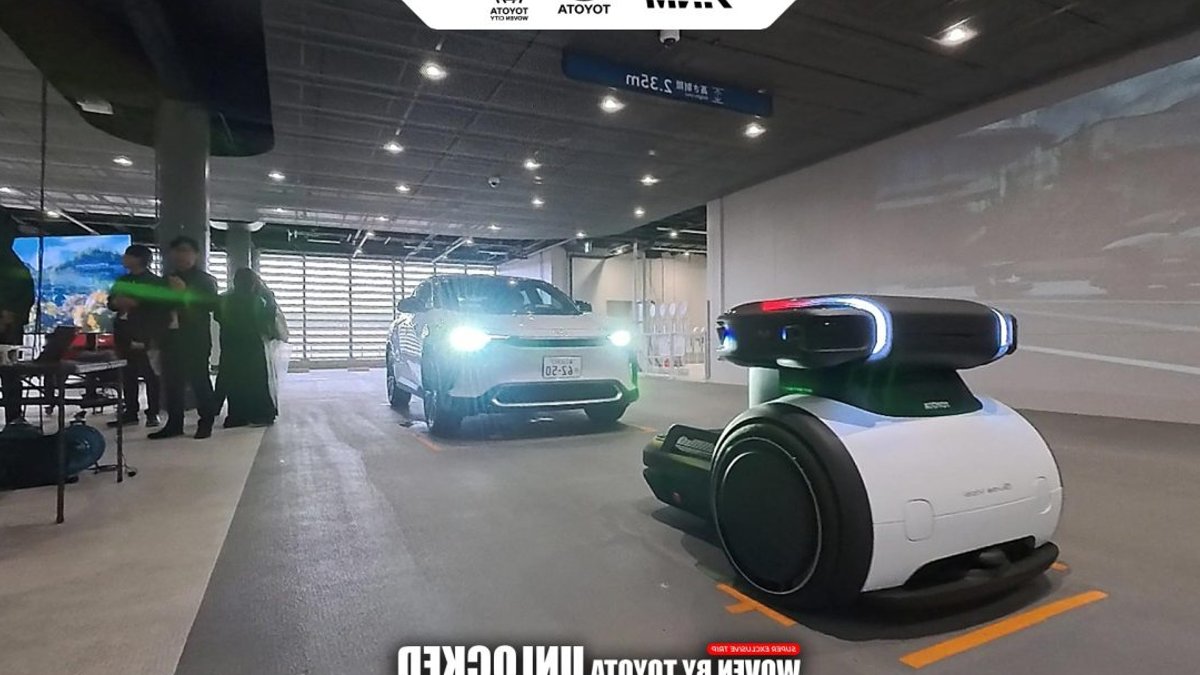
When discussing autonomous vehicles, AI, and future mobility technology, many developers test their systems directly on public roads. The logic is simple: real-world environments provide the best data for training systems. However, Woven City takes a different approach. Instead of testing its technology on public streets, Toyota built an entire city specifically for testing. As the concept of Woven City becomes clearer, it appears this decision is not just about technology, but about how Toyota views safety and system readiness as a whole.
The Challenge of the Unexpected
The biggest problem in autonomous mobility is not when everything runs normally, but when facing unexpected situations or corner cases. Simple things like a pedestrian suddenly stopping, a vehicle moving unpredictably, or a sudden change in environmental conditions can become a major challenge for AI. Even John Absmeier acknowledges that an AI’s ability to make quick and correct decisions in such conditions is a primary concern in mobility technology development. Because of this, Toyota chose a more controlled approach rather than releasing systems directly onto public roads.
Woven City: A Controlled Real World
Woven City occupies a unique position. It is not a closed laboratory, nor is it a fully public city. Toyota describes it as a test course for mobility, an environment that still resembles the real world with humans, vehicles, daily activities, and interactions that cannot always be predicted. The difference is that the entire infrastructure within it remains part of an interconnected ecosystem that can be monitored. In this way, Toyota can test technology realistically while keeping safety factors more controlled before wider application.
Read Also: Astra Insurance Launches New Innovations at 70
Automakers usually focus on sensors, cameras, and AI inside the vehicle. At Woven City, safety is viewed as the result of cooperation between the vehicle and the infrastructure. Roads are separated by function, logistics are moved underground, vehicle and environment data are connected, and AI is used to understand interactions within the city. This means vehicles do not develop in isolation but become part of a larger system.
Toyota also understands that the biggest challenge of future mobility technology is not whether the system works, but whether humans are ready to live alongside it. Therefore, technology at Woven City is tested with real humans, not just computer simulations. Residents or weavers live with autonomous vehicles, personal mobility, and various AI systems every day. From these interactions, Toyota can understand how humans react to technology, whether they feel comfortable, trust it, or are disturbed. These things are difficult to learn if testing is only technical on public roads.
A Philosophy of Slower, Safer Growth
Toyota’s approach may look slower than other technology developments. In fact, this is where the philosophy of Woven City feels different. Instead of chasing the fastest possible implementation, Toyota chooses to ensure its systems are truly mature before widespread use. Even within Woven City, procedures for abnormalities and emergency response are prepared to handle undesirable possibilities. This shows that for Toyota, the future of mobility is not just about creating sophisticated technology, but ensuring that technology is safe when it finally meets the real world.




Leave a Reply