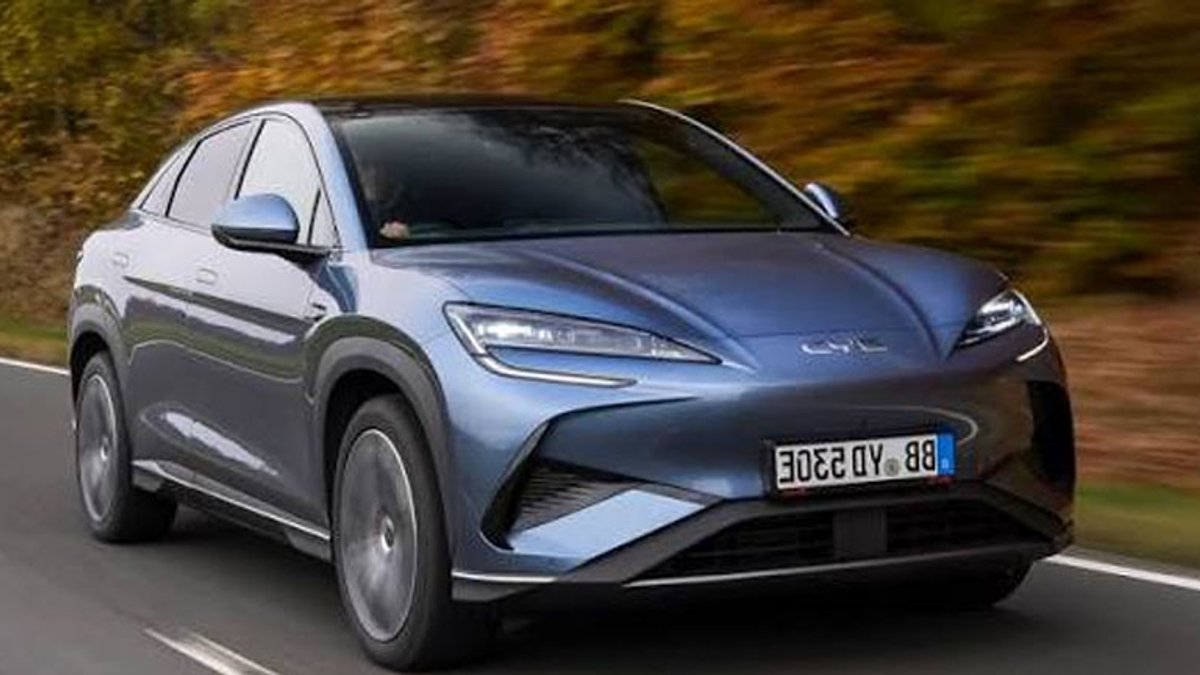
BYD is now making more money from overseas markets than from China itself, reversing a long-standing trend for the electric vehicle giant. This breakthrough marks a new era for the Shenzhen-based automaker, where international income has officially become the main financial pillar, surpassing domestic sources. According to its first-half 2026 financial report, the company’s international revenues surged while domestic sales weakened, marking a dramatic shift in its business model.
For the first six months of the year, BYD earned 181.3 billion yuan (about $27 billion) from overseas operations—a 34% year-over-year jump that now accounts for 53% of total revenue. This sharp increase highlights the critical role foreign markets play in stabilizing the company’s financials. Yet at home, sales collapsed. Domestic revenue fell 31% year-over-year, with vehicle registrations dropping 46% to 795,169 units, according to insurance data. This decline aligns with the sluggish state of the domestic automotive sector, creating a stark contrast between the two fronts.
This reversal reflects broader challenges in China’s slowing automotive market. Overall, the company’s revenue dipped 7.1% to 344.8 billion yuan, and net profit fell 20.5% to 12.3 billion yuan.
To offset domestic weakness, BYD has accelerated global expansion, targeting Europe, Southeast Asia, and Latin America. This aggressive push is also a strategic response to the sluggish sales of plug-in hybrid vehicles within China. Brazil has emerged as its largest overseas market outside China, solidifying the region’s importance. The strategy is paying off: international gross margins hit 22%, lifting the company’s overall gross margin to 18.85%. This improvement in operational margins directly supports the company’s overall financial health amidst domestic headwinds.
Looking ahead, demand for pure electric vehicles (BEVs) is driving growth. In July and August alone, global BYD sales rose 18.5%, with BEV sales up 29.6%. As the second half of 2026 begins, sales enthusiasm is rising significantly, driven by this specific vehicle segment. The shift suggests that while China remains a tough market, BYD’s future may now hinge on maintaining its overseas momentum.
For now, the numbers show a company that has successfully pivoted, but whether this is a sustainable path or a sign of deeper domestic struggles remains unclear. The focus on global success may ultimately define whether the brand can maintain its position or if it is merely masking issues in its home market.





Leave a Reply