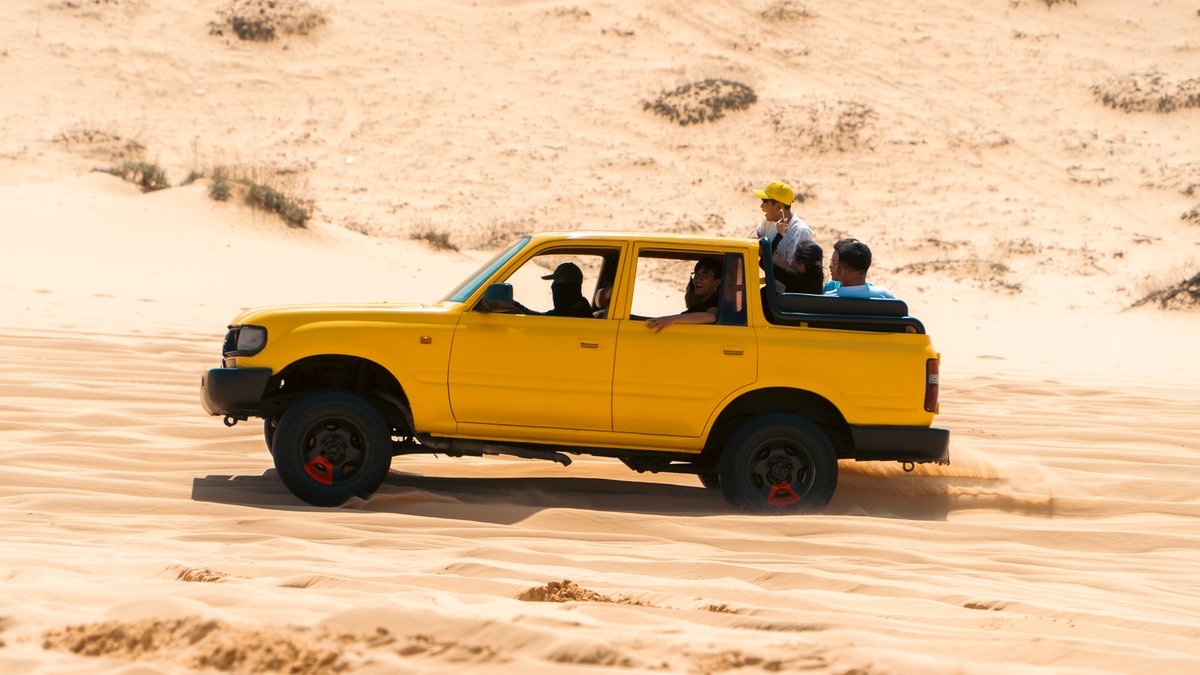
Most 4WD owners rarely use off-road capabilities despite their popularity on the roads. New data from Continental tyres shows that high-riding and rough-road-ready vehicles are some of the best-selling in the country, yet they spend most of their time in the suburbs. The survey polled 2,000 Australian ute and 4WD owners aged 18 and older. Only 18 percent of those surveyed said they had used their vehicle’s off-road capabilities frequently.
Seventy percent of respondents admitted they do not take their vehicle off-road often. Twenty-two percent said they never go 4WDing. A further 21 percent said they had gone off-road only once or twice, and shockingly two percent were not even aware of their car’s off-road ability. Drivers who do head into the bush do so with varying frequency: 33 percent take their vehicle off-road every few months, while 21 percent go once a year. Only six percent said they drive off-road every weekend.
The disparity between the vehicle’s intended purpose and its actual use is stark. While these machines are built for rugged terrain, many owners find themselves handling suburban settings instead. The gap between expectation and reality suggests that while the rugged aesthetic appeals to buyers, the practical demands of daily life often dictate the vehicle’s use. This disconnect means that the heavy engineering designed for extreme conditions is often matched with routine suburban chores.
Related: Australia key to 2027 Chinese SUV success
Despite the low usage rates, the reasons for purchasing these vehicles are clear. Only 22 percent of respondents said they bought their ute or 4WD for its off-road ability. Towing capacity (21 percent) and space for the family (20 percent) were the primary motivators. This indicates that many buyers prioritize utility and practicality over the rugged capabilities the vehicle was engineered to provide.
When owners do venture out, the activities are surprisingly limited. The most common off-roading use in suburban areas is handling gravel or dirt carparks, followed by grassed areas at local parks or sports fields. These are often the only environments where the vehicle’s all-terrain features are actually tested. For most, the “off-road” experience remains a low-intensity activity confined to the immediate vicinity of their homes.
Drivers identified the biggest challenges with these vehicles as parking in tight carparks and driving in poor weather conditions, followed closely by hitting a pothole. The weight and size of these vehicles can make them cumbersome in urban settings, turning what is often a rugged machine into a struggle for maneuverability. This highlights a practical irony: the vehicles are designed for the wild, yet the owners face their greatest difficulties in the city.


Leave a Reply