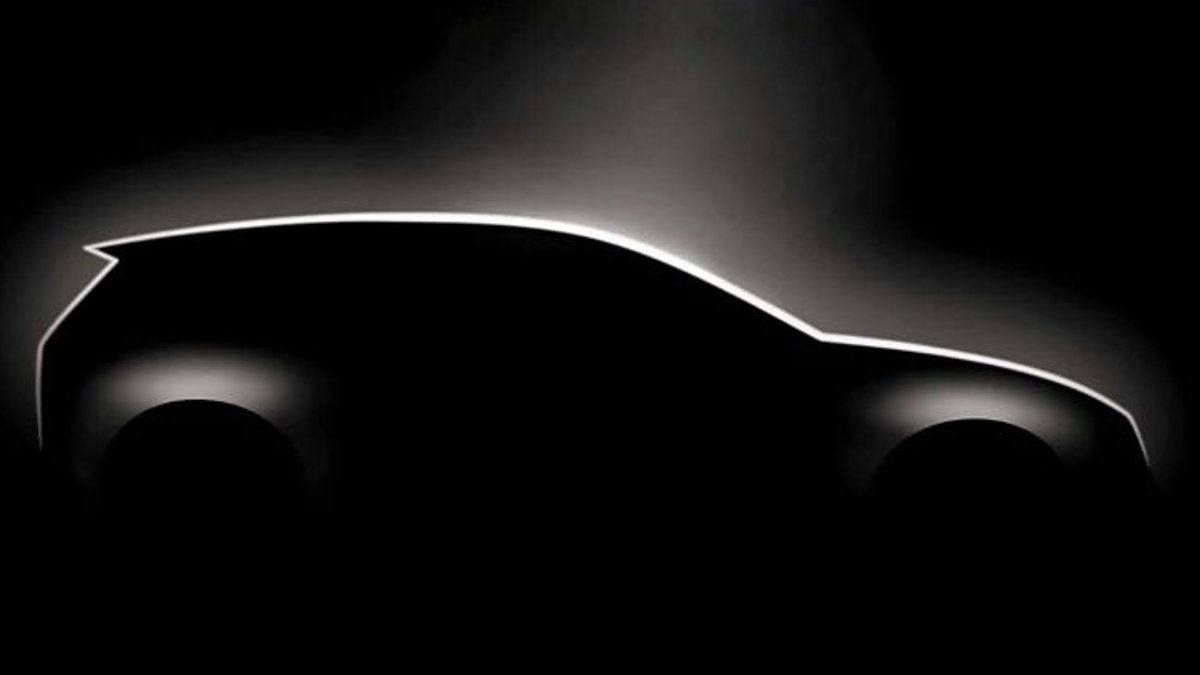
Volkswagen has offered an early look at the future of its most recognizable model. During a works council meeting in Wolfsburg on March 4, 2026, the automaker showed employees the first silhouette of the next-generation Golf. This electric version is expected to carry the nameplate into the manufacturer’s next phase of electrification. The image, shared by German trade union IG Metall, appears to confirm that Volkswagen still plans to combine established model names with the ID branding used for its electric vehicles. This move signals a potential shift in how the company markets its battery-powered lineup.
The photo file itself references the name “ID. Golf,” which confirms earlier reports that the electric hatchback will replace the ID.3. It will do so while wearing the Golf branding. From the outline alone, the new model is clearly tied to the car’s traditional shape. The silhouette clearly displays a compact five-door hatchback shape with pronounced fenders and the rear pillar design that has defined the car since the original Golf debuted in the 1970s, keeping the visual language intact.
Related: Cadillac Optiq Offers Free Power Upgrade
A Shift in Design Philosophy
The automaker is no longer developing completely separate designs for gasoline and electric versions of the same car. When the ID.3 arrived, it looked distinctly different from the combustion-powered Golf. The ID. Golf should take a different route. It seems the company wants to bridge the gap between its heritage and its electric future visually. This suggests the ID.3 might eventually be phased out or repositioned within the portfolio.
This strategy acknowledges the difficulty the brand has faced in selling the “ID” sub-brand on emotion alone. The ID.3 is a competent car, but it lacks the cultural weight of fifty years of Golf history. By merging the two identities, Volkswagen is essentially admitting that legacy still matters to buyers, even as the engineering underneath changes fundamentally. It is a pragmatic choice for a manufacturer that needs volume sales to fund its expensive transition.
Production and Technology
Production plans for the Golf are also changing as Volkswagen continues the transition to electric models. Assembly of the gasoline-powered Golf will move from Germany to Puebla, Mexico, beginning in 2027. This change should free up space at the Wolfsburg plant to build the ID. Golf. The current Golf will not disappear immediately when the electric model arrives. Volkswagen has said that the combustion-powered version could remain in production alongside the EV for some time, possibly receiving a major nose job around the same period the ID. Golf launches.
Related: Australia key to 2027 Chinese SUV success
Under the skin, the ID. Golf will ride on Volkswagen Group’s upcoming Scalable Systems Platform, or SSP. The architecture is designed to underpin a wide range of future electric vehicles across the group. It will feature zonal electronics and new software systems developed in cooperation with Rivian. This collaboration is aimed at fixing the software issues that have plagued previous VW electric models. The platform is expected to support 800-volt charging capability and cell-to-pack battery technology, with both single-motor and dual-motor configurations likely.
Performance variants are probable, with Volkswagen’s GTI and R badges reportedly continuing in electric form. Volkswagen has not confirmed a launch date, but it’s thought the ID. Golf could arrive toward the end of the decade. Some sources point to a potential debut around 2028.

Leave a Reply