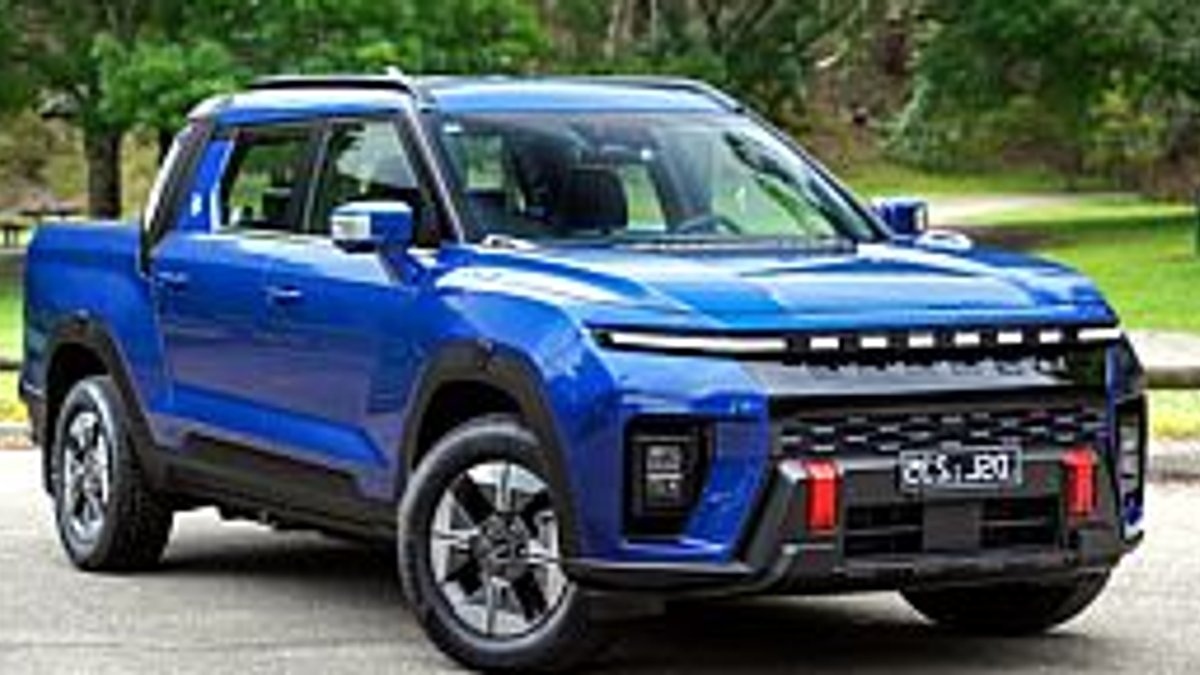
Australia’s independent vehicle safety authority has issued a consumer alert for the KGM Musso EV, warning that locally delivered models lack two airbags previously advertised as standard equipment. The Australian New Car Assessment Program (ANCAP) identified the discrepancy after reviewing the specifications of vehicles sold in the Australian market, raising concerns about the accuracy of safety claims made by the manufacturer.
Missing airbags discovered in Australian-market vehicles
The Australian New Car Assessment Program (ANCAP) said all Musso EVs sold in the country since the model’s November 2025 launch are missing a front-centre airbag and a driver’s knee airbag. Around 306 vehicles had been sold by the end of July 2026, according to industry sales data compiled by the Federal Chamber of Automotive Industries (FCAI) through its VFACTS reporting system. The omission was discovered during a routine review of vehicle specifications, which revealed that the advertised safety features were not present in any of the units delivered to customers.
KGM had marketed the electric ute as including eight airbags, specifically listing a “front row far-side” or “front seat centre airbag” and a driver knee airbag. These features were prominently displayed in promotional materials, including brochures, online configurators, and dealership spec sheets, leading consumers to believe they were purchasing a vehicle with enhanced occupant protection. The front-centre airbag, often referred to in industry terminology as a “far-side” airbag, is a relatively recent addition to vehicle safety systems, designed to mitigate injuries in multi-occupant collisions where lateral forces could cause front-seat passengers to collide with each other.
The centre airbag, typically mounted on the inboard side of the driver’s seat, is designed to reduce contact between front occupants during side impacts. In a side collision, the force of the impact can cause the driver and front passenger to move toward each other, increasing the risk of head, neck, or thoracic injuries. The centre airbag acts as a barrier, absorbing energy and preventing direct contact between occupants. Its absence in the Musso EV means that in a side-impact scenario, the likelihood of such injuries may be higher than in vehicles where the feature is present. Similarly, the driver’s knee airbag helps control driver movement and loading in frontal collisions by preventing the lower legs from sliding forward under the dashboard, which can reduce the risk of femur fractures and knee injuries. Without this airbag, the driver’s lower body may be more vulnerable to impact forces in a head-on crash.
Safety implications and manufacturer response
ANCAP said the discrepancy could affect occupant protection in crashes, advising owners that their vehicle’s safety specifications may differ from what was advertised at purchase. The authority noted that while the absence of these airbags does not necessarily render the vehicle unsafe, it does mean that the level of protection may not align with consumer expectations set by KGM’s marketing. ANCAP’s role in this case has been to clarify the actual safety equipment fitted to the Musso EV, ensuring that owners and prospective buyers are aware of the difference between advertised and delivered specifications. The authority has also highlighted that the missing airbags could influence real-world crash outcomes, particularly in scenarios where these features are designed to provide additional protection.
Related: BYD ships record vehicles to New Zealand
KGM Australia told ANCAP it had corrected its advertising and specification materials by July 31, 2026, to reflect the actual equipment fitted. The company removed references to the front-centre and driver’s knee airbags from its official communications, including its website, dealership literature, and digital marketing assets. However, KGM did not provide a public explanation for why the airbags were omitted from Australian-market vehicles in the first place. Industry observers have speculated that the omission could be due to a variety of factors, including supply chain constraints, regional regulatory differences, or cost-saving measures. The company also did not indicate whether it would offer a retrofit program to install the missing airbags in vehicles already sold, leaving existing owners without a clear path to rectify the discrepancy.
Existing owners with concerns have been directed to contact KGM or their local dealer. ANCAP has advised that while the vehicles remain legally compliant with Australian Design Rules (ADRs), the absence of the advertised airbags may still be a point of contention for some customers. Dealers have been instructed to address inquiries on a case-by-case basis, though no uniform policy has been announced regarding compensation, buybacks, or retrofitting. Prospective buyers of new or used Musso EVs have also been advised to verify the vehicle’s safety specifications before purchasing, as the discrepancy may not be immediately apparent without a physical inspection or confirmation from the manufacturer.
The issue is limited to the battery-electric Musso EV. The diesel-powered KGM Musso, sold in Australia since 2019, is unaffected. The diesel variant, which shares the same platform and body structure as the EV, was introduced to the Australian market under different regulatory conditions and has not been subject to the same advertising claims regarding airbag count. Neither version currently holds an ANCAP safety rating, though the diesel model was assessed under older protocols that are no longer directly comparable. ANCAP’s testing criteria have evolved significantly since 2019, with newer assessments placing greater emphasis on advanced safety features such as centre airbags and autonomous emergency braking systems.
It’s unclear whether the missing airbags would have altered the Musso EV’s safety performance in ANCAP’s testing. The authority typically evaluates vehicles based on the specifications provided by manufacturers, which in this case were later found to be inaccurate. ANCAP’s testing process involves a combination of physical crash tests and computer simulations, with results used to generate a star rating that reflects a vehicle’s overall safety performance. Had the Musso EV been tested with the advertised airbag configuration, the results might have differed, particularly in side-impact and frontal collision scenarios where the missing airbags are designed to provide additional protection. However, without a formal assessment, it is impossible to determine the extent to which the omission would have influenced the vehicle’s rating.
If KGM does not introduce a production change, the Musso EV could remain in the unusual position of being sold with fewer airbags than advertised—without any formal safety rating to help consumers assess its crashworthiness. This situation presents a challenge for buyers who rely on ANCAP ratings to make informed decisions about vehicle safety. The absence of a rating, combined with the discrepancy in airbag count, may lead some consumers to question the vehicle’s overall safety credentials. ANCAP has reiterated its call for KGM to update the Musso EV’s production specifications to include the missing airbags, ensuring that future deliveries align with the safety features advertised at the time of purchase. Until such a change is implemented, the Musso EV will continue to occupy a unique and potentially confusing position in the Australian market.

Leave a Reply